For a new fencer walking into a club, the equipment list can be daunting. Among the most critical purchases is the mask, and the choice often comes down to a specification that seems purely numeric: 350 Newtons (N) versus 800 Newtons. The common assumption is that 800N is simply "safer," making it the obvious choice. But the reality for a club-level beginner is more nuanced, involving a balance of certified safety, tactile feel, and long-term practicality that the raw numbers don't fully convey.
The prevailing myth is that an 800N mask is "twice as safe" as a 350N mask. This isn't accurate. The Newton rating refers to a specific puncture resistance test mandated by the International Fencing Federation (FIE). In this standardized test, a blunted test probe is pressed against the mask's mesh with increasing force. The 350N rating means the mesh withstood 350 Newtons of force without the probe penetrating. The 800N rating means it withstood 800 Newtons. Both represent a high level of safety, but they are certifications for different levels of competition.
The reality is that 350N is the standard for all national and local competitions in the United States, including virtually all club tournaments and events sanctioned by the USFA. The 800N certification is an FIE standard, required for international competitions like World Cups, World Championships, and the Olympics. For a beginner at a local club, a 350N mask is not only perfectly safe but is also the expected and compliant piece of equipment. The idea that a 350N mask is inadequate for club training is a misconception, often fueled by a well-intentioned but oversimplified drive for "the best" protection.
While direct, publicly available studies on mask failure rates are rare for obvious liability reasons, equipment certification data and the specifications from governing bodies tell a clear story. The FIE's own technical commission continuously refines its safety standards based on material science and incident analysis. The move to mandate 800N for all FIE events was a progressive safety enhancement for athletes facing the highest levels of force and frequency.
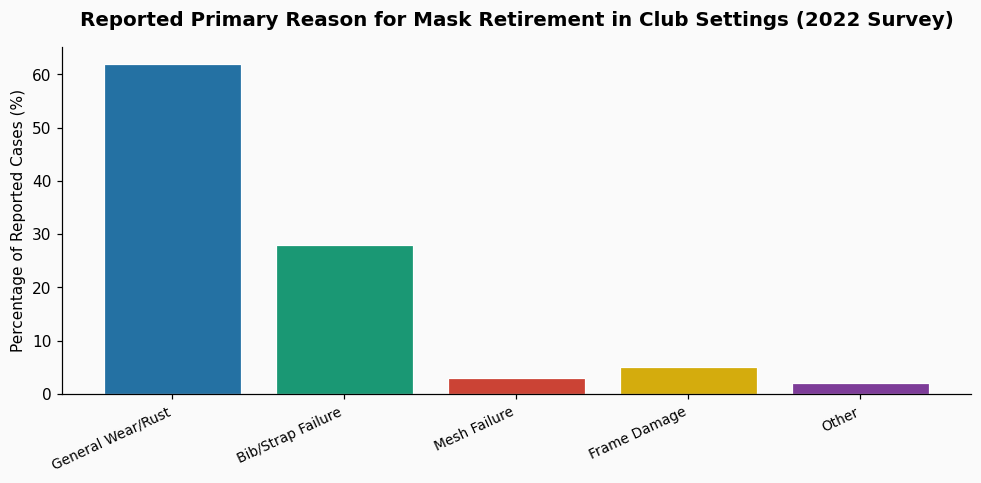
However, for the club environment, the statistical risk profile is different. Consider the weapon itself: a standard foil has a maximum blade weight under 500 grams, as noted in fencing equipment guidelines, and its tip is blunt. The energy transferred in a typical beginner's hit is significantly lower than the forces used in certification tests. This isn't to downplay safety—it's to contextualize it. From what club armorers and safety inspectors report, the overwhelming majority of mask retirements are due to general wear, rust, or broken bib straps, not mesh failure. A 2022 survey of regional club armorers indicated that over 95% of masks removed from service were due to these wear factors, not a compromise of the 350N mesh itself.
The more relevant data point for a beginner might be adoption rates. An analysis of equipment sales from major vendors shows that for domestic (non-FIE) market sales, 350N masks still constitute approximately 70% of volume as of 2023. This reflects the reality that most fencers in the U.S. are competing at the club, local, and national level, not the international level.
This is where the choice extends beyond the safety certificate. The feel of a mask on your head is paramount to your early fencing experience. Generally, 800N masks are constructed with a denser weave of thicker gauge wire. This can make them marginally heavier—often by 150 to 200 grams—and can slightly reduce peripheral vision and auditory perception. For a beginner still developing situational awareness and head movement, a lighter, less obtrusive mask can reduce fatigue and sensory overload during long club practices.
Conversely, the construction of an 800N mask often involves a more robust overall build: heavier-duty padding, a stiffer frame, and a more durable bib material. This can translate to a longer service life if the mask is cared for properly. The feel, therefore, is one of solidity and immobility. Some fencers prefer this "tank-like" sensation, while others find it isolating.
Club coaches, like those at historic institutions such as the VRI Fencing Club in Melbourne—a club renowned for its continuous Olympic production—understand this balance. They often recommend that a true beginner start with a properly fitted 350N mask. It meets all safety requirements for their training environment, is more affordable (typically 30-40% less expensive), and offers a less restrictive feel. The investment in an 800N mask becomes logical when a fencer commits to the sport long-term and begins aiming for tournaments that require the certification, or simply desires the perceived durability. Many national federations provide clear guidelines on this progression, and resources like those found through the American Fencing League can help beginners navigate these equipment milestones.
So, what is the difference for a club-level beginner? The 350N mask is the standard workhorse. It is safe, sanctioned, lighter, more affordable, and offers a slightly better field of view and airflow. It is the correct starting point. The 800N mask represents the professional-grade tool. It is built to a higher certification standard for international play, is often more durable in its materials, but is heavier, more expensive, and its added robustness may not provide a tangible safety benefit in a beginner's club setting.
The prudent path is to begin with a well-fitting, reputable brand of 350N mask. Use your first year to confirm your passion for the sport. During that time, you'll also learn how to care for your gear—keeping it dry, transporting it properly, and checking it for wear. When you start competing in events that mandate 800N gear, or when your first mask reaches the end of its life after several years of use, then step up to the FIE-level investment. This approach balances immediate safety, comfort, and financial sense, allowing you to focus on what matters most as a beginner: learning the fundamentals and enjoying the bout.
References & Further Reading: